From Waste to Product? We answer your questions on the EU’s proposal for End-Of-Waste Criteria

Why are we talking about this right now?

On December 23rd, the European Commission published a proposal for the introduction of EU-wide End-of-Waste (EoW) criteria for plastics as part of an overall Package to Accelerate Europe’s transition to a circular economy, with a specific focus on the circularity of plastics. The package aims to answer Europe’s plastic recycling industry’s struggles, and defines a first set of measures to accelerate Europe’s transition to a circular economy. Further proposals are expected in the upcoming Circular Economy Act, which aims to create a Single Market for waste and Secondary Raw Materials. The EoW criteria proposal from December lays the groundwork for transitioning towards a European market for recycled plastics. But as it stands, the proposal has gaps, especially on chemicals, which will undermine the long-term circular economy in Europe and beyond. To address these gaps, the Rethink Plastic Alliance made concrete recommendations in our RPA response to the Commission’s consultation

What is the idea behind this proposal? 

To support its transition to a circular economy, the EU wants to boost the use of waste-derived materials, also commonly referred to as “secondary raw materials”. In practice, this means that new products should preferably be made using recycled materials to reduce primary materials extraction. Currently, of the approximately 58 million tonnes of plastic produced in the EU, only half is collected and sorted, and only around 13% is recycled into new plastics. One way to achieve this ambition to become the global circularity leader is to double Europe’s circularity rate in the economy to 24% by 2030, by first and foremost championing reduction and reuse measures and by facilitating recycling and the uptake of recycled materials. The current proposal aims to establish a single, harmonised set of EoW criteria to determine when waste ceases to be waste and facilitate the trade and uptake of recycled content. 

What is the legal significance behind the End-of-Waste criteria?

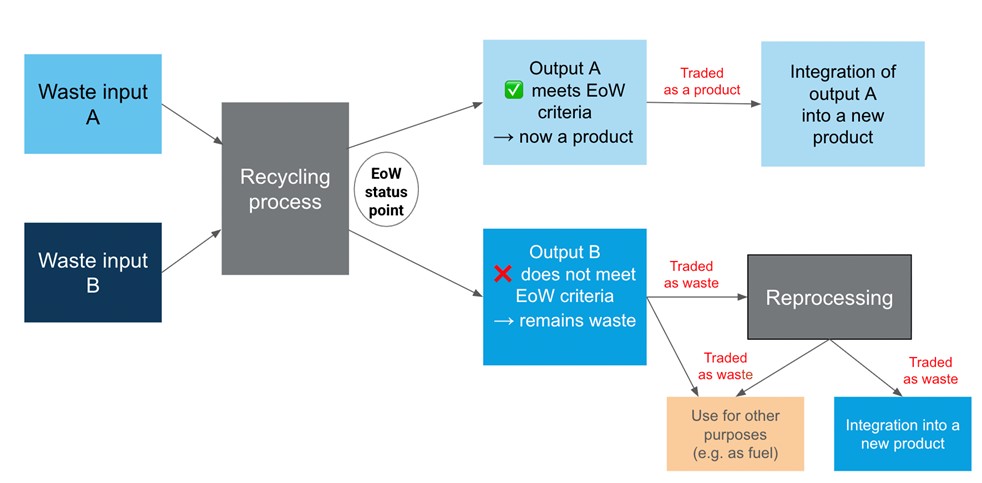
EoW is a legislative definition setting the moment when a material legally ceases to be waste and becomes a waste-derived material that can be used as a product. This legal change matters: once a material is no longer classified as waste, but as a waste-derived material meeting EoW criteria, another regulatory framework – the chemical and product framework – applies. The legislative regime governing products is usually less restrictive than the one regulating waste. For example, the trade of products, within the EU and outside the EU, is much less regulated than waste trade. 

What are the criteria to transition from waste to product? 

For the legal change to happen, the material has to meet four criteria defined under Article 6 of the Waste Framework Directive

  1. The substance or object is commonly used for specific purposes
  2. A market or demand exists for such a substance or object
  3. The substance or object fulfils the technical requirements for the specific purposes andmeets the existing legislation and standards applicable to products; and
  4. The use of the substance or object will not lead to overall adverse environmental or human health impacts

Such criteria are material neutral, and the EU has defined, for a number of materials,  more specific EU-wide harmonised criteria applying across the EU. The current proposal focuses on EU-wide criteria for plastics. 

How does it work? End-of-Waste Criteria act as a legal switch, enabling the transfer of materials from the waste legislative framework into chemical and products legislation,
What does this mean in practice?
  • Setting the ground for a European recycling market – the proposal puts an end to the different national interpretations of EoW rules and unifies them at the EU level, which simplifies cross-border trade, supporting the setting-up of EU plastics waste-derived markets. 
  • Reducing economic costs – without harmonised criteria, the additional administrative and compliance costs for the EU plastics recycling sector are estimated at around €120 million per year, or roughly €260,000 per recycler on average.
  • Clarifying legal responsibilities across the value chain – by defining when waste becomes a product, the proposal reduces legal uncertainty along the value chain, which supports the development of the new markets.

What does this proposal cover?

The proposed EoW framework applies to plastic waste that was addressed by either mechanical recycling or solvent-based processes. These processes do not change the chemical structure of the plastic material. Technologies falling under the umbrella concept of ‘chemical recycling’ remain outside the scope of the proposal, reflecting the need to further assess their respective efficiency and added value to the circularity of the plastics sector. 

How does it impact waste trade?

Waste-derived materials granted EoW status can be traded, within and outside the EU, with far fewer controls than waste and waste-derived materials not granted EoW status. If EoW criteria are too weak or not effectively enforceable and enforced, certain operators could exploit EoW policy to misdeclare waste as a product and escape plastic waste trade regulations, including the upcoming ban on plastic waste exports to non-OECD countries. It is therefore essential to set strong criteria, including waste input restrictions and strict contamination limits, so that facilitating the trade of recycled materials does not undermine regulation on harmful waste trade practices. 

Taking this proposal into the broader context of its proposal (i.e. Mini Circular Economy Act Package), the EoW proposal aims at transitioning from 27 national recycling markets for plastics waste towards a single EU market. The deepening of the EU level is mirrored by the introduction of Trans-Regional Circularity Hubs, in line with the deepening of the internal market. However, for these hubs to fully deliver their potential to transition towards a circular economy, theyneed to embed other economic activities like reuse, repair, refurbishment, and remanufacturing. Reducing waste generation in the first place will support closing the circle and reducing pollution. 

Equally important and necessary in the transition towards a circular economy is to urgently tackle the issue of toxicity. In other words, it means that actions should be taken at the upstream level to remove hazardous chemicals already at the design stage. It is worth noting that there is currently a lack of coherence between chemical and circular economy legislation. In this case, EoW acts as an interface between chemicals, products, and waste, which could either bridge or deepen the gap between these three fields of legislation. Therefore, it is key to focus on managing toxic chemicals through an improved product’s lifecycle, to ensure products’ safety and high-quality recycling. 

For EoW to bridge the above mentioned gap, it is important that the proposal has strong criteria for eligible waste input. However, the current proposal largely focuses on the output of recycling processes, implicitly assuming that hazardous substances can be removed or neutralised during recycling. In reality, this is often technically unfeasible or regarded as too expensive. Furthermore, emphasising the output of the process could create a counter-incentive: instead of phasing out toxic chemicals at source, producers may rely on recycling to “manage” contamination downstream. For these reasons, it is key to act at the production stage to support the redesign of plastic products that will support safer and more cost-effective recycling, while improving the coherence between circular economy objectives and chemicals legislation.

Introducing an EU-wide EoW framework for plastics is a welcome and necessary development. An EoW framework promises real benefits for recyclers, but to ensure that this progress is lasting, the proposal must be strengthened and complemented by stronger action on chemicals and a broader vision of circularity that goes beyond recycling alone. Only by aligning waste, product and chemicals legislation can Europe truly use resources effectively and strategically,  close the loop—and keep it closed. 

Notes:

To know more about why setting clear, effective, and enforceable EoW criteria is essential to not undermine waste trade legislation, you can read this blog from our member EIA

Catching up on the Commission’s Chemical Recycling plans 


In July, the European Commission launched a public consultation on its proposed rules for calculating, verifying and reporting recycled content in single-use plastic (SUP) beverage bottles. The Commission intends for the adoption of these rules to enable chemical recycling in the EU, hoping that it will help economic actors meet the recycled content targets set under the Single-Use Plastics Directive (SUPD). However,  more and more studies show that chemical recycling is a problematic technology. In our Rethink Plastic response to the consultation, we urge the Commission to be careful not to create a precedent for recycled content targets that relies on these questionable technologies.  

Not all recycling processes are equal 

The landmark Single-Use Plastics Directive introduced recycled content targets for plastics for the first time in the EU legislation, establishing that by 2030, plastic beverage bottles should contain at least 30% recycled content. In a previous Implementing Decision, the Commission had established that these recycled content targets should be reached exclusively through the use of mechanical recycling technologies. The term “mechanical recycling” refers to the process in which plastic waste is collected, sorted, broken down into smaller pieces, and then turned into new products without changing its chemical structure. This technology is long-established and well-suited to recycle the most prevalent types of plastic beverage containers – PET bottles. While reduction and reuse measures must be at the heart of the EU policies, mechanical recycling does have a place in a well-functioning circular economy.

Chemical Recycling – too good to be true?

The Commission’s 2025 proposal, however, repeals the previous restriction to mechanical recycling and aims to promote “additional and innovative recycling” methods, in particular chemical recycling. Chemical recycling is an umbrella term for several processes that change the chemical structure of plastic waste. The different processes can be classified into two main categories: depolymerisation and thermocracking. Depolymerisation relies on a chemical reaction in which polymers are chemically broken down to monomers. The second category – thermocracking – is based on a heating process that affects the chemical composition of plastic waste and should be seen as a recovery process rather than as a form of recycling. In limited instances, this plastic waste can be used to produce new polymers and plastics, but in most cases, plastic is simply turned into fuel and then burned, releasing greenhouse gas emissions into the atmosphere. The two main types of thermocracking are gasification and pyrolysis.

Even though the Commission’s proposal heavily promotes “Chemical Recycling”, it does not actually define what it means by this. However, many of the provisions in its proposal appear to be referring to pyrolysis, suggesting that the Commission is promoting this technology. This is problematic because the low yield and high levels of emissions associated with pyrolysis make it closer to a recovery process than a genuine recycling technology. It is therefore ill-suited to help Member States reach their recycled content targets while its associated pollution endangers the EU’s transition to a clean and toxic-free circular economy. 

The many issues with Chemical Recycling

While the (petro-)chemical industry has been heavily promoting chemical recycling as a viable and sustainable technology to boost the circularity of plastic, the reality is that its capacity to actually create new plastics is severely limited, and the safety of the process is yet to be assessed. Furthermore, the negative environmental impact of thermocracking processes, such as pyrolysis and gasification, is immense. These processes require high energy inputs, while generating a lot of losses, and they emit, on average, nine times more greenhouse gas emissions than mechanical recycling and more, even, than almost all forms of primary plastic production. 

Given these concerns, the Rethink Plastic Alliance’s feedback urged the Commission to:
  • Ensure recycled content only comes from post-consumer waste in line with the principle of effectiveness.
  • Ensure consistency with other EU legislation, including on waste and chemicals. Concretely, this means:
    • Complying  with the definition of recycling as established under the Waste Framework Directive by removing the possibility of recovering materials, as well as removing the concept of “dual-use output” and the definition of “recycling pathway”;
    • Changing the definition of “chemical building blocks” to “intermediates” as defined under REACH;
    • Enabling proper chemical traceability along the value chain to ensure a safe circular economy;
Civil society participation weakened in the face of strong influence from chemicals industry

This consultation was launched in early July and closed in mid-August, giving stakeholders only a few weeks in the middle of the EU summer break to respond to its proposal. This timing is not conducive to effective participation, especially for civil society organisations who must often internally consult their members for input. To ensure the robust participation of civil society in EU decision-making, future consultations should run for longer periods and not take place during the traditional holiday period.

The proposal was published in the context of the Chemical Industry Action Plan and presented as an enabling factor for the chemical industry to facilitate the “transition to circularity by encouraging the use of alternative feedstocks and reducing dependencies on virgin fossil resources”. It seems that the primary goal of the Implementing Act is no longer to address the plastic pollution crisis. Instead, the goal is now to explicitly support the chemical industry. This development reflects the growing prominence and influence of the (petro-) chemical industry that we have been witnessing in the past year in decision-making related to the environment and health, and it is a cause for concern. 

Next steps

The Commission is now assessing the feedback it received from various stakeholders in the consultation and will send a proposal to Member States’ experts for approval. The Rethink Plastic Alliance will follow the evolution of this proposal closely and continue to engage at every opportunity.

Here is what you missed on plastics policy over the summer

What you need to know about the Global Plastics Treaty 

For almost two weeks, country delegates from around the world met in Geneva to attempt to finalize negotiations on a new Global Plastics Treaty. But following a fraught negotiating process heavily influenced by petrostates and the petrochemical industry, the negotiation collapsed without an agreement. The resumed fifth meeting of the Intergovernmental Negotiating Committee (INC-5.2) was adjourned, but ended without a clear agreement on the path forward.

Petrostates and the fossil fuel lobby sabotage the process 

The talks were effectively held hostage by the vested interests of petrostates and the petrochemical industry. Despite only being a small group of countries within the UN plenary, delegates from a handful of oil- and plastic-producing countries—Saudi Arabia, Russia, and the United States, among others–refused to compromise. Instead, they used delay tactics, procedural stonewalling, and flat-out refusal to engage in substance to derail progress and block any attempt at advancing an ambitious treaty. Their obstruction was reinforced by the unprecedented presence of fossil fuel and petrochemical lobbyists that flocked to Geneva  (234+ registered lobbyists by conservative estimates), outnumbering the combined diplomatic delegations of all 27 European Union countries and the European Commission combined (233 delegates). Unfortunately, their sabotage attempts were successful as the negotiations fell flat without agreement on a path forward. 

It wasn’t all doom and gloom

Despite the stalemate, we witnessed some encouraging developments and reasons for cautious optimism. Undeterred by the destructive efforts of petrostates, the majority of countries came together and reached stronger alignment. Discussion documents submitted by countries during the negotiation sessions, known as “Conference Room Papers”, show that there is now more convergence on the text, specifically on the key issues of production, chemicals and products, finance, as well as future decision-making. Moreover, a majority of countries supported a stand-alone article on health, reflecting wide recognition of the impacts of plastics on human health throughout their lifecycle. 

“Courage for your communities. You hold the power. You have the duty. Protect our children and our future.” 

Despite lack of space for meaningful participation, or even interventions, and restricted access throughout the process, civil society, scientists, Indigenous Peoples, frontline and fenceline communities, waste pickers and workers made sure their voices were heard. Since the beginning of this process three years ago, they have been instrumental in shifting the narrative on plastic pollution – moving from a narrow focus on marine litter to a widespread affirmation that plastic pollutes throughout its entire life cycle. Their presence in Geneva highlighted countries’ duty to place human health and human rights at the core of the treaty negotiations.

What role did the EU play? 

The EU played an indispensable role in Geneva as part of the group of ambitious countries that held the line on ambition, rejecting the watered-down draft texts presented by the Chair that would have rendered the treaty toothless. Its leadership played a vital role in ensuring ambition was kept alive on provisions around production, chemicals and health. But the task ahead demands even more. The EU must take a stronger role sitting at the table with emerging ambitious leaders like China, while recognising that its true strength lies in partnership and collaboration with the leaders from the Africa Group, Pacific group and the Group of Latin American countries who have carried ambition from the start. By combining bridge-building with concrete proposals, the EU can help deliver the strong and operational treaty the world urgently needs. 

Next steps unclear, but ambition must remain high

At the current moment, it is still unclear what the next steps in the process are. Another INC session may be convened, though it has become clear this could only be successful if the process is changed. Some call on ambitious countries to leave the UN process and to take the negotiations further with a “treaty of the willing” outside the UN context. No matter which avenue is chosen, the EU must stand united and work towards ensuring unity within the group of ambitious countries. It has a key role to play, building bridges and not creating unnecessary rifts between ambitious countries. It must take the initiative to make concrete propositions on how to move forward, including on defining a process that is truly operational and achieves the goal of agreeing on an ambitious treaty. 

Read more from our members: 

In July, the European Commission launched a public consultation on its proposed rules for calculating, verifying and reporting recycled content in single-use plastic (SUP) beverage bottles. The Commission intends for the adoption of these rules to enable chemical recycling in the EU, hoping that it will help economic actors meet the recycled content targets set under the Single-Use Plastics Directive (SUPD). However,  more and more studies show that chemical recycling is a problematic technology. In our Rethink Plastic response to the consultation, we urge the Commission to be careful not to create a precedent for recycled content targets that relies on these questionable technologies.  

Not all recycling processes are equal 

The landmark Single-Use Plastics Directive introduced recycled content targets for plastics for the first time in the EU legislation, establishing that by 2030, plastic beverage bottles should contain at least 30% recycled content. In a previous Implementing Decision, the Commission had established that these recycled content targets should be reached exclusively through the use of mechanical recycling technologies. The term “mechanical recycling” refers to the process in which plastic waste is collected, sorted, broken down into smaller pieces, and then turned into new products without changing its chemical structure. This technology is long-established and well-suited to recycle the most prevalent types of plastic beverage containers – PET bottles. While reduction and reuse measures must be at the heart of the EU policies, mechanical recycling does have a place in a well-functioning circular economy.

Chemical Recycling – too good to be true?

The Commission’s 2025 proposal, however, repeals the previous restriction to mechanical recycling and aims to promote “additional and innovative recycling” methods, in particular chemical recycling. Chemical recycling is an umbrella term for several processes that change the chemical structure of plastic waste. The different processes can be classified into two main categories: depolymerisation and thermocracking. Depolymerisation relies on a chemical reaction in which polymers are chemically broken down to monomers. The second category – thermocracking – is based on a heating process that affects the chemical composition of plastic waste and should be seen as a recovery process rather than as a form of recycling. In limited instances, this plastic waste can be used to produce new polymers and plastics, but in most cases, plastic is simply turned into fuel and then burned, releasing greenhouse gas emissions into the atmosphere. The two main types of thermocracking are gasification and pyrolysis.

Even though the Commission’s proposal heavily promotes “Chemical Recycling”, it does not actually define what it means by this. However, many of the provisions in its proposal appear to be referring to pyrolysis, suggesting that the Commission is promoting this technology. This is problematic because the low yield and high levels of emissions associated with pyrolysis make it closer to a recovery process than a genuine recycling technology. It is therefore ill-suited to help Member States reach their recycled content targets while its associated pollution endangers the EU’s transition to a clean and toxic-free circular economy. 

The many issues with Chemical Recycling

While the (petro-)chemical industry has been heavily promoting chemical recycling as a viable and sustainable technology to boost the circularity of plastic, the reality is that its capacity to actually create new plastics is severely limited, and the safety of the process is yet to be assessed. Furthermore, the negative environmental impact of thermocracking processes, such as pyrolysis and gasification, is immense. These processes require high energy inputs, while generating a lot of losses, and they emit, on average, nine times more greenhouse gas emissions than mechanical recycling and more, even, than almost all forms of primary plastic production. 

Given these concerns, the Rethink Plastic Alliance’s feedback urged the Commission to:
  • Ensure recycled content only comes from post-consumer waste in line with the principle of effectiveness.
  • Ensure consistency with other EU legislation, including on waste and chemicals. Concretely, this means:
    • Complying  with the definition of recycling as established under the Waste Framework Directive by removing the possibility of recovering materials, as well as removing the concept of “dual-use output” and the definition of “recycling pathway”;
    • Changing the definition of “chemical building blocks” to “intermediates” as defined under REACH;
    • Enabling proper chemical traceability along the value chain to ensure a safe circular economy;
Civil society participation weakened in the face of strong influence from chemicals industry

This consultation was launched in early July and closed in mid-August, giving stakeholders only a few weeks in the middle of the EU summer break to respond to its proposal. This timing is not conducive to effective participation, especially for civil society organisations who must often internally consult their members for input. To ensure the robust participation of civil society in EU decision-making, future consultations should run for longer periods and not take place during the traditional holiday period.

The proposal was published in the context of the Chemical Industry Action Plan and presented as an enabling factor for the chemical industry to facilitate the “transition to circularity by encouraging the use of alternative feedstocks and reducing dependencies on virgin fossil resources”. It seems that the primary goal of the Implementing Act is no longer to address the plastic pollution crisis. Instead, the goal is now to explicitly support the chemical industry. This development reflects the growing prominence and influence of the (petro-) chemical industry that we have been witnessing in the past year in decision-making related to the environment and health, and it is a cause for concern. 

Next steps

The Commission is now assessing the feedback it received from various stakeholders in the consultation and will send a proposal to Member States’ experts for approval. The Rethink Plastic Alliance will follow the evolution of this proposal closely and continue to engage at every opportunity.

Without addressing toxicity and pollution, the EU’s Clean Industrial Deal is just “clean-washing”

But how “clean” can the Commission’s plan really be if it fails to properly address one of the highest emitting and polluting sectors, and fails to consider toxicity and pollution? Addressing the petrochemical and plastic industry and preparing for a managed phase-down must be part of any serious plan to promote a “clean” European industry. 

The plan presented today does none of this, and coincidentally – or not -it was presented in Antwerp, the largest petrochemicals hub in Europe and the second in the world. It was launched in a closed-door event with some of Europe’s biggest polluters, including the biggest chemicals industry lobby, CEFIC. Civil society and communities that have to live every day with the pollution caused by these same industries, were not invited to the meeting. This is an affront to democratic and participatory processes, as well as the impacted citizens.

The Commission has accurately identified the need to decarbonise – and therefore reduce emissions – in key European industries, a crucial step towards reaching the EU’s climate targets and boosting EU competitiveness. Yet the proposal foresees hardly any action to curb Europe’s pollution and toxic contamination crises. In fact, it does not address one of the highest-emitting and highest-polluting sectors at all – namely the plastics and petrochemicals sector. 

By designing policies that reduce the production and consumption of plastics and petrochemicals, the EU can take a significant step toward curbing both pollution and GHG emissions, staying on track for its Green Deal commitments while also reaching its stated goals of decarbonisation and competitiveness. 

Plastic production is the most energy-intensive sector in Europe

Plastic polymer production is fueling oil and gas demand as 99% of plastics are made from fossil fuels such as oil, gas, and coal. Plastic production has seen major growth over the past decade. The industry’s current growth trajectory is exponential and plastic production is expected to double or triple by 2050. Plastic polymer production could consume up to one-third of the remaining global carbon budget by 2050, even in a decarbonized scenario.

In the EU, plastic production is by far the largest industrial oil, gas, and electricity user, even ahead of energy-intensive industries such as steel, automobile manufacturing, and food and beverages. In 2020, plastic production was responsible for nearly 9% of the EU’s fossil gas consumption and 8% of EU’s oil consumption

The plastic industry in the EU is looking at pathways to decarbonise its processes, but it is heavily relying on not-proven technologies, such as carbon capture and storage, and chemical recycling. Yet even if the plastic industry were to decarbonise its energy supply, that would not significantly reduce the emissions associated with the plastic industry as 70% of fossil fuels used in plastic production stem from raw material production rather than energy use for processing. Reducing the overall production and consumption of plastics and petrochemicals is the only way to significantly reduce the greenhouse gas emissions linked to plastics.

Plastic production – a pollution nightmare

Increasingly, the building blocks of plastic come from fracked gas in the United States. The pollution and impacts on communities associated with fracking are well evidenced, including water supply depletion, drinking water contamination, air pollution and habitat destruction.

In addition, many chemicals used in plastic production and products are known to be hazardous to human health and the environment, impacting workers and users. For example, exposure to PVC widely used in flooring, pipes, and medical devices, is associated with an increased risk of liver, brain and lung cancers. Several in-depth investigations have revealed the scale of the PFAS pollution crisis across Europe. Next to being an acute danger to public health and the environment, cleaning up this pollution will cost the staggering number of €100 billion each year. Microplastics, and the chemicals in them, reach everywhere in the environment and our bodies, with increasing evidence on the impacts associated. 

Why stick to single-use when innovative, cleaner solutions already exist? 

The majority of plastics produced are short-lived products and packaging, even though more durable and reusable options are available. At the end of their short yet very harmful life, these single-use plastics create further air, soil and water pollution through inadequate disposal and landfilling, as well as incineration. The plastics industry presents plastics as a circular material, promising recyclability. Yet most (single-use) plastics are not recycled, and contain hazardous chemicals that impair recycling, and end up incinerated. 

Even when recycling is possible it is not a closed-loop method as the addition of virgin materials is very often necessary, plastics can only be recycled a short number of times and are often downcycled in another product. Only 30% of plastic produced in Europe is actually recycled – and on a global level, only 9% of all plastics ever produced have been recycled. This shows that the “lifecycle” of plastics is neither circular nor clean and that drastic plastic production reduction is urgent for the EU to achieve its climate and zero-pollution objectives. 

What the EU can do to build a fossil-free, toxic-free and resilient Europe 

Europe, and the rest of the world, can drastically reduce its production and consumption of plastic in various sectors, as alternatives are already widely available.

Close to 40 % of plastic produced in the EU is used for packaging, most of which for  single-use applications, significantly contributing to the staggering 190kg annual packaging waste generation per inhabitant in the EU. The mainstreaming of packaging-free practices and reuse systems across the EU could drastically reduce plastic production and consumption associated with packaging. This is in line with the packaging waste reduction mandated by the recently adopted Packaging and Packaging Waste Regulation and would reduce emissions associated with plastic production and plastic and plastic feedstock imports.

To be “clean”, any deal must aim towards the zero-pollution ambition of the EU; this requires detoxifying production processes, products (including plastics), and our economy overall. Yet, the Clean Industrial Deal presented by the European Commission does not mention any intention to tackle (chemical) pollution, aside from referring to a future Chemical Industry package scheduled for the end of the year which appears to largely aim at giving the sector a significant boost. Instead, a strong implementation of the zero pollution action plan and Chemicals Strategy for Sustainability could actually move the EU further away from a toxic-free society. 

Reuse has always been part of life, in various forms, allowing products and packaging to be used multiple times for the same purpose. Mainstreaming reuse would maximise its benefits, including reducing resource use, water use, energy use and emissions, while bringing economic value and creating jobs. And we already know they work, because several EU member states have implemented well-functioning systems, for example in the shape of deposit return schemes. In line with the PPWR, member states should invest in the development of these innovative services – an opportunity that could create hundreds of thousands of jobs in the next few years according to the European Commission’s projections. 

A strategic use of resources puts an end to dirty deals

The EU imports most of the feedstock for plastic production, notably oil and (fracked) gas from the US and, until recently, a considerable amount of gas from Russia. Europe’s dependence on energy imports became painfully obvious in the wake of Russia’s invasion of Ukraine. Now, the threat of a “trade war” is looming over the EU and exposing its reliance on foreign imports once more. Reducing plastic production and consumption, by supporting the reuse economy, and improving toxic-free recycling, would also reduce the EU’s dependency on unstable partners and support its resilience. 

In a context where we have no other choice than to reduce our overall use of resources to remain within planetary boundaries, we have to find a strategic use of those resources. Producing millions of avoidable short-lived single-use plastics is not one. Increasing recycling and recycled content integration and substituting fossil-based feedstock with bio-based feedstock will not do the trick if it is not preceded with drastic reduction in plastic production and accompanied with a shift from short-lived and single-use to long-lasting and reusable products.  

There is no financial case for producing this much plastic

Data shows that petrochemical production in Europe has been stagnating, and in the case of plastics has shown signs of decline. This is due to a number of factors, among which are high energy prices, but it is chiefly caused by overcapacity, overproduction and a lack of demand. In addition, consumer attitudes are shifting away from single-use disposable plastic to more durable, less toxic options. 

Even though there is no business case for investments in the petrochemical and plastics sector, the Clean Industrial Deal foresees 100 billion-Euro-subsidies to energy-intensive industries. However, a new investigation reveals that these companies already have substantial access to capital. Their financial issues actually stem from a misallocation of resources. These companies, among which petrochemical producers BASF and TotalEnergies, are funneling the bulk of their profits – over 75% –  into shareholder payouts instead of investing in making their businesses fit for the green transition.

A “clean” deal should not fuel the profits of highly polluting corporations. Instead, the EU should support real solutions to protect the health of people and the planet.  

The EU needs to plan a just transition for the petrochemical industry

According to the industry itself, Europe’s petrochemical market share has been declining: this should be the EU’s opportunity to prepare for and initiate the transition of the petrochemicals and plastic sector in Europe and manage declining production and the already ongoing closure of facilities in a way that is just and fair, especially for workers. 

The plastic sector is a poster child of a model based on high resource use, high energy consumption, and intensive chemical use. It is at the intersection of the climate, waste, and pollution crisis, fueled by harmful subsidies and with major impacts on human rights. Yet, it can also serve as a model for a planned and just transition of an industry. By designing this transition with workers, communities, scientists and civil society, supporting reskilling and trainings, the EU has the opportunity to ensure a truly just transition.

Supporting plastic production reduction in Europe and on the global stage

Successfully managing the transition of the plastics and petrochemicals industry in Europe would reaffirm the EU’s support for plastic production reduction on the global stage. As part of a group of 100 countries, the EU and its member states supported a dedicated provision to control and eventually reduce plastic production in an international legally binding instrument, the Plastics Treaty

By supporting a strategic use of resources by industries through decarbonisation and reduction as well as regulating what is allowed to enter the EU market, the EU can significantly reduce pollution and harm to human health caused by plastic production, in Europe and elsewhere. Supporting reduction measures in the plastics and petrochemical sector could allow the EU to, once again, inspire a leveling up of environmental and social requirements across the world. 

Further Resources:

Why we need ecodesign for plastics

Briefing by ECOS and Rethink Plastic. Brussels, Autumn 2024

Plastic has quickly become one of the most ubiquitous materials used in consumer products. Since the 1950s plastic boom, it has replaced steel in cars, glass and paperboard in packaging, cotton in clothes, and wood in furniture. Plastic is cheap to produce, persistent in the environment, and very versatile; it can be rigid or made to bend and stretch, and can be inherently durable.

The way we currently design, produce, consume, and dispose of plastic is, however, highly unsustainable and inefficient. It is crucial to rethink the place of plastic in our society, prevent the evergrowing pollution it generates as well as develop the necessary tools and initiatives to for a responsible approach to plastic. To minimise the environmental and health footprint of one of the most widely used materials in countless products, plastic requires a comprehensive ecodesign approach.

Plastics and polymers need to be included as an intermediate product in the first working plan under the EU Ecodesign for Sustainable Products Regulation (ESPR) – foreseen for early 2025. By prioritising plastics and polymers in the first ESPR working plan, the EU will take a major step in addressing the plastic pollution crisis, and work towards minimising the environmental footprint of plastic and polymer production.

The new ESPR establishes a comprehensive ecodesign framework, giving the European Commission the authority to implement stricter sustainability requirements across various product categories. This regulation is a key tool to accelerate the European transition to a sustainable, toxic-free, and circular economy. Ultimately, the success of the ESPR will depend on its implementation, including many upcoming activities, secondary legislation, and the role of standardisation. Prioritising products and horizontal measures will reduce potential delays and ensure that the most polluting products are dealt with first.

The first working plan, covering at least three years, is expected to come out in the Spring of 2025. It will likely include the sectors, listed below, which were included in the ESPR text (Article 18(5)). The Commission has already carried out some preliminary work on these and other sectors, including plastics and polymers. The Commission is empowered to adapt the list for the first working plan, provided that it gives justification. The legislation specifies the following sectors to be prioritised:

  • Intermediate products: iron, steel, aluminium, lubricants, and chemicals.
  • Products: textiles (notably garments and footwear), furniture (including mattresses), tyres,
    detergents, paints, energy-related products, and ICT products/other electronics.

Plastic has an outsized impact on human health and the environment (1) , yet the ESPR regulation did not specifically include the plastics and polymers sector as a priority for the first working plan.

The ESPR is intended to improve the environmental impacts of many different product streams and plastics is significantly present in many of them, e.g. paints, textiles, electronics, furniture. Plastics and polymers should therefore be addressed as an intermediate product to ensure these other products are well-designed from the foundation.

By prioritising plastics and polymers, the EU will take a major step in addressing the plastic pollution crisis, working to minimise the environmental footprint of plastic and polymer production. There are many reasons for addressing the plastic and polymer sector in the first working plan:

  • It is projected that plastics production and consumption will grow considerably over the coming decades, with deleterious effects (2). By prioritising the sector under the ESPR, some of these impacts could be mitigated.
  • It would align several EU policy priorities, providing regulatory certainty to an industry under much scrutiny. The Packaging and Packaging Waste Regulation (PPWR) will also create requirements for plastic products in delegated acts (delivered by 2028), including this sector under the ESPR will ensure that work is not unnecessarily duplicated.
  • The EU and its Member States are playing a key role in the UN negotiations for an International Plastics Treaty – a new international legally binding instrument to address plastic pollution. By addressing the plastics and polymers sector under the ESPR, the EU will continue to take the lead in improving the environmental performance of this sector. Establishing performance and information requirements for plastics and polymers in the EU market would provide a roadmap for work at the global level.
  • Other intermediate products will likely be addressed in the working plan, including the chemical sector, which has clear overlaps with plastics and polymers. It is therefore a unique opportunity to set up minimum requirements for plastics and polymers, which ECOS has advocated since 2019. There are drawbacks and risks associated with each part of the entire lifecycle of plastic. To minimise the environmental footprint of one of the most widely used materials, in countless products, plastic requires a comprehensive ecodesign approach.

For a more comprehensive overview, read our position paper: Making the case for a holistic plastic strategy: Addressing polymers and plastics under the ESPR


(1) The Minderoo-Monaco Commission on Plastics and Human Health, The Minderoo-Monaco Commission on Plastics and Human Health | Annals of Global Health, 2023.
(2) Global Plastics Outlook, Policy Scenarios to 2060. 3. Plastics use projections to 2060 | Global Plastics Outlook: Policy Scenarios to 2060 | OECD iLibrary (oecd-ilibrary.org), 2022

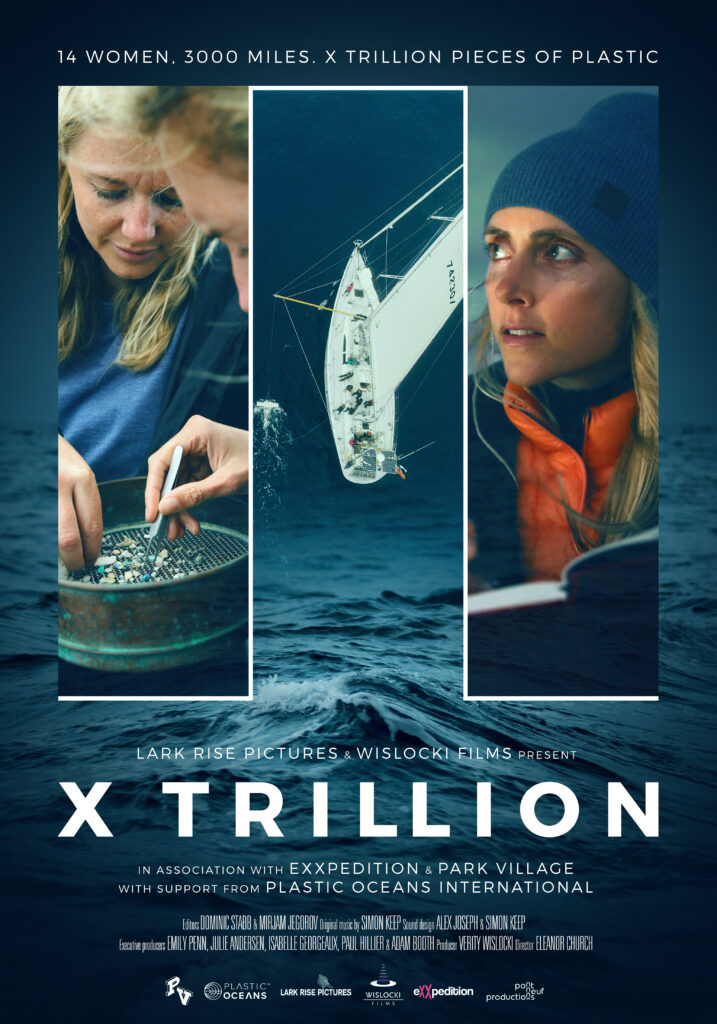
“X Trillion” film screening & debate

Community screening of the new film by Eleanor Church featuring a 3-week sailing expedition to the Great Pacific Garbage Patch on the hunt for microplastics, to find out about the sources and solutions to this global challenge.

The film will be followed by a questions and answers exchange with the public, with speakers including the film director, the European Commission, scientists and NGOs working on microplastics.

The screening is part of this year’s Ocean Week in Brussels, organised by Rethink Plastic members Seas At Risk, ClientEarth, Surfrider Foundation Europe, as well as BirdLife, Oceana and WWF.

Programme:

7PM: Screening of X TRILLION

8PM: Debate

Please note, tickets must be purchased on the Cinema’s website

Costs: €8 – €10

The Plastic Pellet Crisis Exposes Weakness in proposed EU Regulation

After yet another container loss, the shores of Galicia, Asturias and Cantabria (Spain), along the Atlantic coast, are under siege from a relentless tide of microplastics. Those small particles washing ashore are plastic pellets, which are the raw material used to manufacture all plastic items.

As a coalition of NGOs, we are raising our collective voice to call for action to stop this environmental catastrophe stemming from the systemic poor handling of plastic pellets throughout the value chain. And this can be achieved with the adoption of ambitious EU legislation.

The Galician NGO, Noia Limpa, was the first to sound the alarm, unveiling the shocking dimension of this plastic pellet pollution. The scale of this issue, resulting from a ship losing several containers at sea, is staggering. Out of over a thousand lost bags, over one hundred filled with pellets have already been found on the Spanish shore, each potentially containing up to a million pieces of plastic pellets. Some bags were torn and leaking small plastic particles – composed of polyethylene and UV stabilizers – into the environment. The greater concern is that the vast majority of the lost bags have not yet been found – they will either drift away and contaminate other regions or remain in the ocean and release their hazardous load.

Once in the ocean, pellets float widely, causing widespread harm to flora and fauna. Their small size makes them nearly impossible to clean up. Moreover, the pellets contain harmful additives, such as UV light stabilizers, and act as toxin magnets and transport mediums for toxic substances, adding to the risks posed to human health and the environment.

This crisis is not isolated to Galicia; it is a European and even a global problem. NGOs have been increasingly reporting plastic pollution cases for years, and as plastic production is expected to rise, this will only escalate dramatically.

This crisis is also not solely a maritime transport issue. It is an illustration of the careless handling of plastic pellets by an entire industrial sector. Plastic pellets are spilled at each stage of the value chain, from production and conversion sites to recycling installations and during transportation. In the European Union alone, an estimated 160,000 tons of plastic pellets are lost annually.

The current events only stress the need for bold EU measures to prevent this pollution and finally hold polluters accountable. It is appalling that, as of now, taxpayers are the ones bearing the cost of the countless incidents of pollution across the EU.

The good news is that European legislation is currently under review, following a proposal for a regulation from the European Commission tabled in October 2023. However, as it stands, the text will be too weak to make a significant difference. Shockingly, while being responsible for the Galician catastrophe, maritime transport is simply exempted from any requirements. Another major flaw is that smaller enterprises from the plastic value chain benefit from symbolic measures which will not be sufficient to prevent pellet spills.

The EU must urgently address this regulatory gap, and the culture of impunity must be crushed. An ambitious and comprehensive regulation is needed.  Thus, prioritizing prevention should be non-negotiable, and accountability for all pellet handlers must be a universal demand – irrespective of a company’s size or a mode of transport, maritime included.

Real change can only be achieved with Members of the European Parliament stepping up and showing political courage under the current mandate. With the EU elections happening only in a few months, current Members of the European Parliament will be judged on their ability to respond in practical terms to the problems faced by European citizens. The time for half-measures and empty promises is over; the citizens demand decisive action now.

We call on the European Parliament to step up in the fight against microplastic pollution by adopting a comprehensive and ambitious regulation.

Signatories

Break Free From Plastic
ECOS
Environmental Investigation Agency
European Environmental Bureau
Fauna & Flora International
Fidra
Gallifrey Foundation
Rame Peninsula Beach Care
Noia Limpa Entre Todos
Surfrider Foundation Spain

Kimo
Plastic Soup Foundation
Rethink Plastic
Seas at Risk
SOS Mal de Seine
Surfrider Foundation Europe
Ocean Care
Good Karma Projects
Retorna

Prevention and reuse – the only solution to record levels of packaging waste

The latest Eurostat data on packaging waste, published in October 2023, reaffirms this upward trajectory with a new record of 188.7 kg per capita in 2021 – a 6% increase in waste generation in only one year. The same data also reveals that recycling rates have stagnated since 2010. The packaging sector is now responsible for approximately 59 million tonnes in CO2eq, more than the annual emissions of Hungary. Packaging is also a major driver of virgin resources exploitation – using 40% of plastic and 50% of paper in Europe.

Without action, the EU would see a further 19% increase in packaging waste by 2030. This
reality is incompatible with Europe’s ambitions for climate neutrality and resource efficiency.
The Commission proposal for a packaging and packaging waste regulation (PPWR) responds
directly to this challenge with the goals to:

  • Prevent the generation of unnecessary packaging waste: reduce it in quantity, restrict
    overpackaging and promote reusable packaging solutions;
  • Make all packaging on the EU market recyclable by 2030;
  • Reduce the need for primary natural resource use and create a well-functioning market for
    secondary raw materials (notably plastics).

In this regard, the PPWR offers a necessary pathway to reverse the trend of an ever more
material and carbon intensive packaging sector, while creating real economic opportunities for
truly circular businesses.

In light of the latest official data cited above, opposition to a more pragmatic and systemic
approach to reducing Europe’s dependency on single-use packaging looks increasingly
difficult to defend. However, the PPWR proposal has been one of the most intensely lobbied
files of this political term. Policy makers across institutions have complained about an endless
influx of requests, untransparent studies and increasingly aggressive lobbying strategies. The
attempts to undermine key waste prevention measures of the regulation were, regrettably, not
accompanied by any credible alternatives to tackle the growth of packaging waste.
As a result of this intense negative lobbying, the Parliament’s responsible committees diluted
the ambition of the proposal introducing several exemptions which undermine the Regulation’s
chances to stop the uncontrolled growth of packaging waste.


In November, all members of the European Parliament will choose either to provide a
credible solution to the packaging waste crisis by supporting reuse targets (art. 26) and
tackling unnecessary packaging (art.22 & Annex V), or they will surrender to the
aggressive lobbying of the single-use packaging industry.

FAQ to sort through the trash talk

1) Was the Commission proposal for a packaging regulation too ambitious?

The reduction of packaging waste proposed by the Commission is very modest when compared
with the more than 20% increase in packaging volumes over the last decade. A 5% reduction of
packaging waste by 2030 should also be put in the context of the European climate target to
reduce emissions by 55% by 2030 – which major industrial actors in the packaging sector are
not on track to meet.
The proposal was not disproportionate or excessive: even if all the waste prevention and reuse
measures contained in the draft regulation were to be fully applied, this would still be insufficient
to achieve a 5% reduction of packaging waste generation by 2030. Hence, the regulation
clarifies that Member States will have to take additional measures to meet their waste
prevention targets. The position of the Parliament ENVI Committee further widened this gap by
introducing several loopholes and exemptions on reuse targets and restrictions for unnecessary
packaging, thus undermining the EU chances to stop the growth of packaging waste in a
harmonised way.

2) Do we really need to focus on waste prevention? Can’t recycling be enough?

Recycling – on its own – will not reduce waste levels and is insufficient to reduce Europe’s
material and carbon footprints at the speed and scale needed to achieve our climate and
environmental goals. Also simply substituting one single-use material for another is not a
genuine solution
to the waste crisis.
The rate of packaging waste recycling in the EU has essentially stagnated since 2010. This is
despite many industry initiatives and policies focused on recycling. In other words, any
improvements in recycling have struggled to keep up with growing levels of waste. The EU must
resist the temptation to continue business as usual focusing only on marginal improvements in
waste management as this approach has already proven to be insufficient. Instead, Europe
must develop a comprehensive approach to circular packaging which, alongside ensuring all
packaging is recyclable, prevents the generation of unnecessary waste and scales up reuse.

3) Why don’t we just shift from plastics to single-use paper, it’s green, renewable, recyclable?

Some of the largest polluters in the packaging value chain, led by single-use paper producers
and McDonald’s, conducted a massive lobbying campaign to greenwash throwaway paper as
a sustainable alternative to single-use plastics and reuse. New research proved this is a false
solution:

Paper packaging is already the largest packaging waste stream in Europe. With 34 million
tonnes of waste generated in 2021, paper alone makes up for more trash than the two next
largest waste material streams, plastic and glass, combined.

  • Paper packaging is already the largest packaging waste stream in Europe. With 34 million tonnes of waste generated in 2021, paper alone makes up for more trash than the two next largest waste material streams, plastic and glass, combined.
  • Paper packaging used in the HORECA sector is particularly problematic as it is usually
    combined with plastic or chemical coatings, it rarely includes recycled content or is
    successfully recycled into new packaging.
  • The raw materials for paper packaging are increasingly imported from developing countries,
    contributing to global deforestation and water stress. On average, three billion trees are cut
    each year for global paper packaging.

To genuinely prevent waste, the EU must adopt effective rules to address the uncontrolled
growth of single-use packaging, no matter the material it is made of.

4) What is the problem with the current rules of the Packaging & Packaging Waste Directive?

One of the major limitations of the current Directive, and a primary motivation for its revision,
was that it was too vague and unenforceable. As a result, it failed to prevent even the worst
cases of overpackaging, e.g. apples in shrink film and polystyrene trays or excessive empty
space in online deliveries. There is now a risk of repeating the same mistake by introducing
unnecessary derogations, exemptions and loopholes leading to regulatory uncertainty and
undermining the regulation’s practical effectiveness in the Single Market.
The original PPWR proposal already contained many unnecessary derogations and
exemptions. Instead of closing these gaps, this situation was worsened by the position adopted
by the Environment Committee which widened loopholes on key waste prevention measures.
The sweeping and broadly defined derogations introduced, e.g. on art. 26 on reuse (2040
targets not binding anymore) and art. 22 & Annex V on unnecessary packaging (broad
unjustified exemption for paper) undermine their practical implementation and enforcement.
Instead of a patchwork of loopholes to meet lobbying requests, the European Parliament must
deliver a harmonised set of rules that can be practically implemented and enforced to reduce
waste, restrict unnecessary packaging and promote reusable solutions.

5) What has been the impact of the unprecedented lobbying from the throw-away packaging industry?

The packaging regulation has been one of the most intensely lobbied files of this political term.
Policy makers faced an endless influx of untransparent studies and increasingly aggressive
lobbying strategies. This is confirmed by the analysis from InfluenceMap showing significant
opposition from industry groups which is putting the EU’s efforts to address packaging waste at
risk.

Since the publication of the proposal, several misleading and unsubstantiated lobbying
arguments have managed to divert attention. This included overinflated fears about the impacts
on hygiene, food waste and existing recycling infrastructures as well as untransparent studies
claiming that single-use packaging would have a better environmental performance than reuse
systems.

Despite having been widely debunked by NGOs, scientists and the Commission, these false
arguments have successfully influenced the positions of the Parliament Industry and
Agriculture committees
. The pushback from laggards in the packaging industry, has not only
distracted from the useful discussions on how to improve the proposal, but it also succeeded to
water it down. While all available independent evidence supports more action on waste
prevention, the compromises voted in ENVI Committee show an overall reduction on the level of
ambition. As things stand, the European Parliament is poised to significantly lower the ambition
of this regulation compared to the original proposal, the opposite of the constructive role that
MEPs have played in other Green Deal files.

6) Is reuse really better than single use? What about industry-funded LCAs?

In line with the waste hierarchy, extensive independent scientific literature, illustrates the potential
of reusable packaging systems compared to single use. Well-designed reuse systems can reduce
waste at source, cut energy, emissions, resource and water use, and create jobs and business
opportunities. Evidently these systems must be well-managed and meet a minimum number of
rotations through efficient collection, washing and redistribution to maximise their environmental
potential.
Decision-makers should base their decisions on peer-reviewed and independent evidence rather
than on biased studies sponsored by vested interests in order to sow doubt and maintain the
status quo. Regrettably, life cycle assessments commissioned by single use packaging producers
have misled policy makers. These studies have been found to exhibit a clear bias using cherrypicked scenarios, a worrying lack of transparency and unfavorable assumptions against reuse
(return rates, washing and dedicated return journeys). 58 experts in life cycle assessment have
urged caution around using packaging industry-funded LCAs to make general conclusions in the
sector, pointing to their lack of transparency or flawed assumptions.
In the meantime, new evidence has emerged which bolsters the Commission’s proposals on
waste prevention and reuse, in particular for the food and beverages sector. Preliminary
results
from the Joint Research Centre, show predominantly favourable results for reuse systems
compared to their single use packaging equivalents.

7) What about the socio-economic impacts of the regulation?

The measures included in the PPWR are expected to create 29,000 new green jobs and
generate savings for consumers of around 100EUR per year by 2030. New rules ensuring all
packaging is recyclable will increase the value of waste and thus improve the viability of the
recycling sector. Recycled content targets will also create certainty for investors. In parallel,
scaling up reusable packaging will depend on local job creation and new businesses
throughout Europe to manage reverse logistics and pooling infrastructure.
In contrast, although single-use packaging production (for example for take-away) experienced
rapid growth in recent years, this has rarely resulted in job creation due to high levels of
automation and consolidation in packaging manufacturing. Growing material prices (up 23% in
two years
) will also make reuse increasingly economic. Furthermore, market pressures have
seen a growing share of raw materials (such as paper pulp from Brazil) or finished single-use
packaging (such as finished packaging from China) being imported from outside the EU.
Banning the worst cases of deceptive over-packaging practices, such as false bottoms or
double walls, will also prevent citizens from being misled by unfair practices.

8) Is reusable packaging unhygienic? Is all packaging safe?

It’s important that all packaging is clean and hygienic: this is not dependent on whether the
packaging is single use or reusable
. Safe reusable food packaging systems have been
operating at scale across Europe without incident for decades. Each time we eat from a
ceramic plate in a restaurant we also participate in a reuse system. In the case of refill – where
citizens bring their own packaging – the proposal also allows companies to reject dirty
packaging and the ENVI report removes their liability.
Missing from this debate, however, are concerns around chemical safety of packaging.
Unfortunately, toxic substances are still widely used in many types of food packaging, which is
a significant source of direct exposure of the EU population to harmful substances. The ENVI
report rightfully restricts two of the most problematic chemicals PFAS and BPA and provides
the possibility to further de-toxify packaging where it poses a considerable risk to human
health.

9) Does single-use packaging prevent food waste?

Food waste and packaging waste have grown simultaneously in Europe. On this issue, it
cannot be argued that single-use packaging has helped to reduce food waste levels in a
meaningful way. Following an extensive meta-analysis of 33 life cycle assessment studies,
UN Environment also concluded that shelf-life extending packaging should be reserved for
the foods with the highest environmental impact (such as meat and dairy products), while
products such as fruit and vegetables could mostly be sold without packaging. Many types of
packaging were also shown to increase food waste, such as multipacks which encourage
over purchasing
(such as nets of citrus fruits or bulb vegetables like onions).
In this way, the Commission’s proposal follows the evidence, and it already provides ample
flexibility to guarantee products’ protection, e.g. excluding restrictions for packaging with a
“demonstrated need” to prevent food waste (such as protection for fragile berries).

10) Is it true that reuse will undermine existing investments in recycling?

The business case for recyclers is not only dependent on the total amounts of packaging waste
generated, but – more importantly – on its recyclability, and on the quality and demand for
recycled material. The early warning reports on the 2025 packaging recycling targets reveal that
recycling infrastructure is, in many areas, struggling to keep up both with the volumes of waste,
difficult to recycle designs and materials, and low-quality sorting. Similarly in a response to
concerns from the Italian Parliament
, the Commission explained: “the available infrastructure
including in Italy, are not going to be sufficient to treat all packaging waste”.
Though the new regulation aims at reducing the total amount of waste, it also has the objective
to make all packaging recyclable in an economically viable way by 2030. This increase in
recyclability of waste will offset the reduction in waste generation by rewarding recyclers with
growing volumes of quality materials. In this way, waste prevention measures, including reuse,
do not need to undermine investments in recycling infrastructure. Furthermore, other measures
such as deposit-return systems for single-use and reusable packaging, as well as recycled
content targets will all improve the business case for recyclers.

11) Who actually wants reuse? Is it just an NGO dream?

Establishing re-use systems at scale across Europe is not a utopian idea, but a transition that is
already underway. Reuse now needs fundamental policy support to thrive. Several Member
States – including France, Germany, Portugal, the Netherlands and Luxembourg – have already
implemented policies in support of reuse, including reusable packaging targets and restrictions
on overpackaging. At the same time, across Europe a multitude of dynamic and disruptive
businesses are already operating reusable packaging systems at local, regional and national
level. Local authorities also support the transition to reusable packaging, as this will reduce
public waste management costs which are driven by littering and the uncontrolled growth of
single-use packaging waste.
Without harmonised policy intervention at EU level, however, reuse systems will not reach their
optimum scale and performance and European businesses will not face a level playing field
within the Single Market. This is why a rapidly growing coalition of businesses, cities, and civil
society organisations
is now calling for ambitious reuse targets at the EU level without delays.
Also, more than 100,000 citizens, organisations, businesses and cities had already called for
reuse
to become the norm at the beginning of the regulatory process.
The business case of reusable packaging systems is increasingly evident and provides an
unmissable opportunity for Europe’s economy. Instead of pouring precious resources into shortlived throwaway items, efficient reuse systems will enable businesses and consumers to reap
the utility offered by packaging, while preserving value over time. For this to happen, it will be
crucial to deliver clear and ambitious reuse targets for 2030 and 2040 to provide businesses the
confidence to invest and innovate.

Contacts:

ECOS, European Environmental Bureau, Zero Waste Europe and the #BreakFreeFromPlastic members Deutsche Umwelthilfe and Recycling Network Benelux.

NGOs call on EU to urgently address microplastics unintentionally released into the environment

Dear President von der Leyen:

During your 2019 to 2024 Presidency, the EU has made important progress on a variety of environmental priorities. We, the nine undersigned non-governmental organisations, now write to urge you to deliver on your vision to curb microplastic pollution in the European Union and cement your legacy as a global leader in tackling plastic pollution – and microplastic pollution, specifically – with decisive action in the next few months. This would firmly set the EU on the path to meeting its ambitious target of a 30% reduction in microplastic pollution by 2030, as set out in the Zero Pollution Action Plan

If no action is taken, direct emissions of microplastics to the marine environment are expected to more than double globally in the next twenty years from a 2016 baseline. In high-income economies such as the EU, pollution from these microplastic sources is estimated to exceed that from macro-plastics such as single-use plastics and packaging. The scientific evidence on the impacts of microplastics is overwhelming, with studies demonstrating their contribution to pollution and harm to human health and ecosystems

Given the magnitude of microplastic pollution, we commend the Commission for making strides towards curbing the release of microplastics into the environment. The recent adoption of the European Commission’s proposal on the restriction of intentionally-added microplastics by the REACH Committee is a step in the right direction and aligns with the European Chemicals Agency’s findings that microplastics pose an inadequately controlled risk to the environment.  

Nevertheless, microplastics unintentionally released from paints, tyres, pellets, and textiles still require urgent attention: these sources represent the vast majority of microplastic emissions to the environment. We are encouraged to see progress on legislative initiatives to curb emissions from tyres and textiles through Euro 7 and the EU strategy for sustainable and circular textiles, respectively, and see the potential for the Ecodesign for Sustainable Products Regulation to cover sources such as paint, tyres, geosynthetics and textiles. However, after years of delays, we are yet to see the release of a dedicated proposal to reduce microplastic emissions from the aforementioned sources and tackle the release of pellets – the third largest source of microplastic emissions in Europe.  

Pellet loss occurs at every stage of the supply chain, yet loss and spills are preventable by implementing low-cost pellet handling best practices. Since 1991, the plastics industry has derived a set of best practice measures known as Operation Clean Sweep (OCS). However, OCS is a voluntary scheme with a lack of monitoring, compliance, and enforcement mechanisms. Further, only approximately 5% of the European plastics industry has committed to OCS. 

Meanwhile, pellet pollution continues to plague Member States. A study funded by the European Commission estimates that 167,431 tonnes of pellets may be lost to the environment in Europe per year. Tackling pellet pollution is clearly high on the agenda for Member States. In 2021, the OSPAR contracting parties adopted Recommendation 2021/06, emphasising the need to develop and implement pellet loss prevention standards and certification schemes based on best practices, aiming to prevent or significantly reduce plastic pellet loss across the entire supply chain. In a call for ambitious measures, five Member States underscored the need for precautionary measures at the EU level as “national and voluntary measures alone are not sufficient” and that “measures should be taken early in the lifecycle.”  

What is needed now is mandatory, EU-wide legislation that obligates all pellet-handling companies to provide independent verification that pellet loss prevention measures have been implemented, maintained, and monitored for effectiveness. EU-wide action would eliminate this preventable source of microplastic pollution, ensure a level playing field for businesses of all sizes, and demonstrate global leadership in enacting decisive measures to address pellet loss. EU legislation can also serve as a blueprint for action on microplastic and pellet pollution in the ongoing negotiations to develop a legally binding instrument on plastic pollution. 

In conclusion, we urge the European Commission to prioritise the swift release of this crucial proposal, which is vital for delivering the 30% microplastic pollution reduction target, advancing the objectives of the Green Deal before the end of this legislative mandate in 2024, and strengthening Europe’s position as a global leader in addressing plastic pollution.  

Yours sincerely, 

Environmental Coalition on Standards: ECOS   

Environmental Investigation Agency 

Fauna & Flora 

Fidra 

Gallifrey Foundation 

The Pew Charitable Trusts   

Rethink Plastic  

Seas At Risk  

Surfrider Foundation